Permanence is not about how a home arrives
The word modular still carries an old association. For many people it suggests something light, movable, quick, or slightly provisional — a building that has not fully committed to its site. That association is worth challenging, because it confuses the method of construction with the quality of the result.
A home can arrive in modules or panels and still feel completely grounded. Permanence is not decided on the day of delivery. It is decided much earlier, in the specification and the design: in decisions about fabric, junctions, materials, storage, and how the building meets the ground. A modular home that has been thought through reads as settled. One that has only been assembled reads as temporary. The difference is design attention, not the lorry it travelled on.
The first layer is the building fabric
The first thing that makes a home feel permanent is something you never see: the building fabric. Insulation, airtightness, the wall and roof build-up, the glazing specification, and the way cold bridges are handled all work together. Comfort is rarely the result of a single heater. It is the result of an envelope that holds warmth steadily and does not lose it through gaps and weak points.
Ventilation belongs in the same conversation. A well-sealed home needs a deliberate ventilation strategy so the air stays fresh and the building stays healthy. When fabric, airtightness, glazing, ventilation, and the heating approach are designed as one system, the home feels stable — warm without effort, quiet without drafts. That stability is a large part of what people mean when they say a house feels solid.
A permanent home is quiet
Sound is an underrated part of permanence. A home can be well insulated against heat and still feel thin if it is not quiet. Acoustic comfort comes from the floor build-up, the internal partitions, the doors, and the control of mechanical noise from ventilation or heating equipment.
Rain on a roof can be a pleasant sound or an intrusive one, depending on the construction. Conversations in one room should not carry uninvited into the next. A compact modular home, in particular, benefits from acoustic care, because rooms sit close together. When sound is handled well, a smaller home feels more substantial than its floor area suggests. When it is ignored, even a large home can feel provisional.
Junctions matter more than slogans
Permanence is built at the junctions. Where a wall meets a floor, where a window meets its reveal, where a ceiling meets a wall, where a threshold meets the outside — these are the places a home is quietly judged, even if no one says so aloud.
Skirtings, thresholds, service penetrations, the edges of kitchens and bathrooms, the framing of external openings: most people will never name these details. But they feel them. A crisp, consistent junction reads as care. A loose or awkward one reads as haste. This is why a modular home should be assessed on its detailing rather than its marketing. A promise of quality is easy to print; a well-resolved junction is harder, and it is the thing that actually lasts.
“People rarely notice a good junction, a quiet room, or a well-placed threshold. They notice the feeling that nothing is temporary.”
Materials need weight, warmth and ageing quality
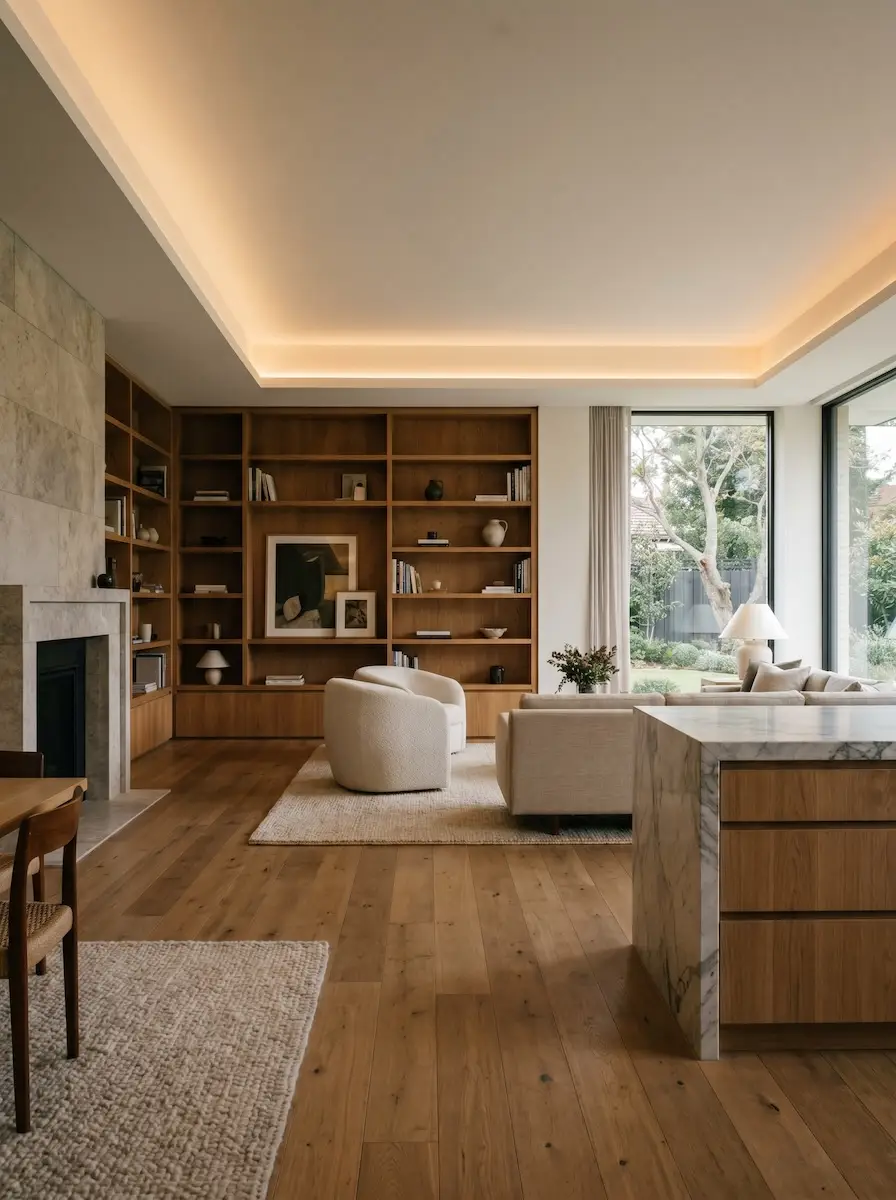
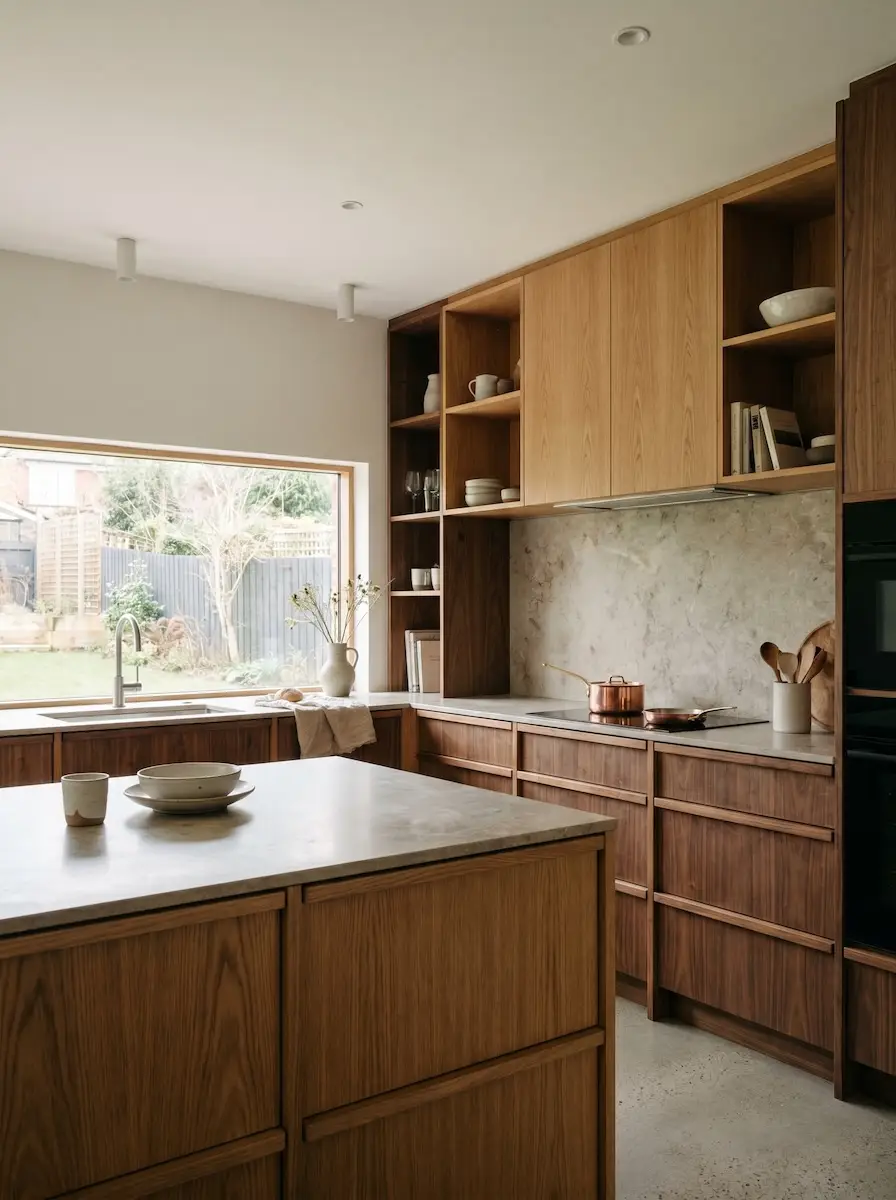
Materials carry a lot of the feeling of permanence, and not through luxury. Timber, mineral surfaces, honest flooring, solid door hardware, considered handles and worktops, and external cladding chosen to weather rather than discolour — these are about touch and time, not show.
A permanent-feeling material is one that ages honestly. It develops a surface rather than failing. It can be maintained rather than replaced. Fake luxury — thin finishes imitating something heavier — tends to announce itself within a few years. The better approach for a modular home is a smaller palette of materials that are genuinely durable, pleasant to touch, and straightforward to look after. A home you can maintain is a home that stays.
Storage makes compact living feel calm
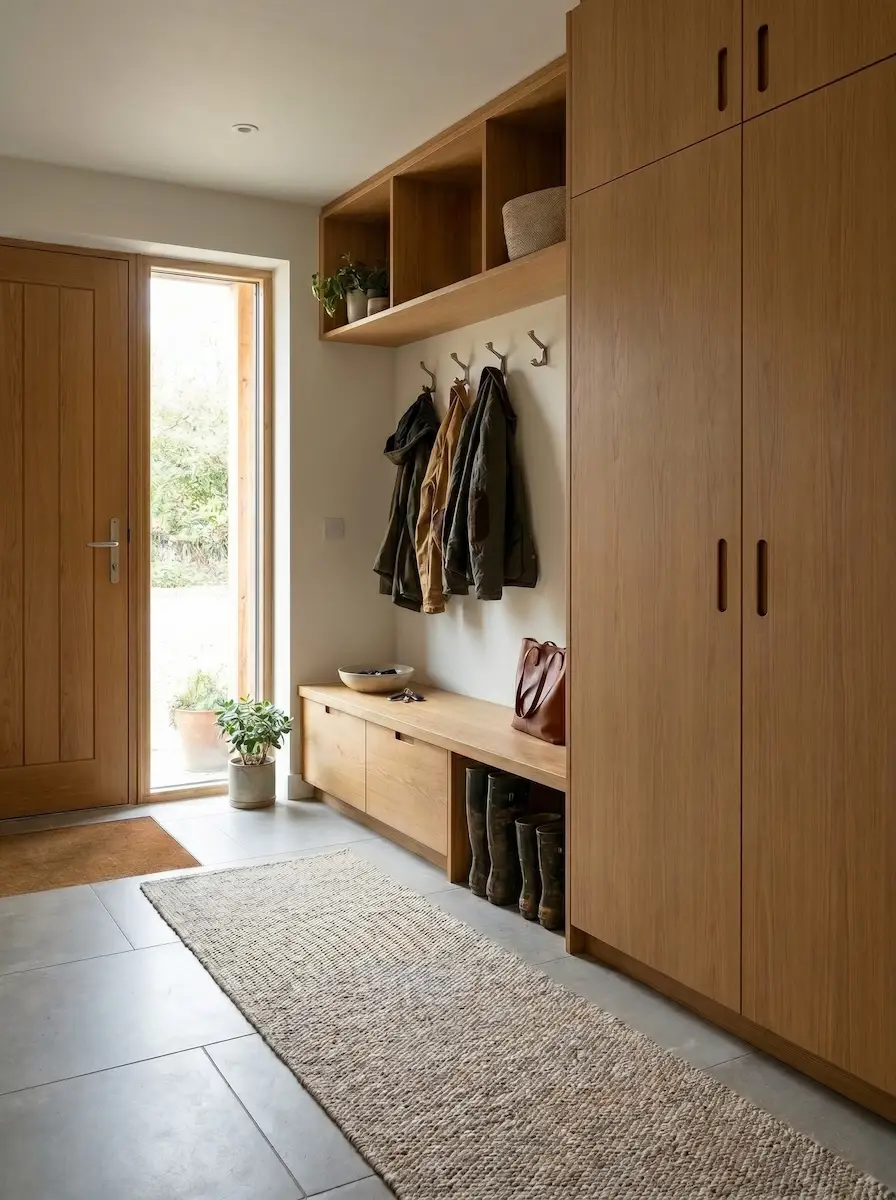
Storage is quietly one of the strongest signals of permanence. A compact home without enough storage feels temporary almost immediately, because daily life has nowhere to go. A smaller home with well-planned storage can feel calm and settled for years.
Built-in storage, a proper utility zone, somewhere for boots and outdoor gear, considered kitchen and bedroom storage, and a place for cleaning equipment and the small machinery of a household all matter. Hidden service runs help too. The aim is not more cupboards for their own sake, but the right storage in the right places, so the home does not have to absorb clutter on its visible surfaces. A home that can stay tidy without effort feels permanent.
Light must be placed, not just maximised
Daylight makes a home feel alive, but more glass is not automatically better. Light needs to be placed. Window orientation, the path of morning and evening sun, privacy from neighbours and the road, and the control of glare all shape how a room actually feels to be in.
A wall of exposed glass can leave an interior feeling overexposed and strangely temporary, with nowhere quiet to sit. Carefully placed windows do the opposite: they frame a particular view, bring warmth in at the right time of day, and leave solid wall where solid wall is useful. A grounded interior usually has a balance of openness and enclosure. That balance is part of why a considered home feels settled rather than on display.
The home must meet the ground properly
A modular home should not look as though it was set down and left. How it meets the ground does a great deal of quiet work. Foundations, the height and handling of the threshold, any steps or deck, the way drainage and paths are arranged, and the planting around the entrance all decide whether the home feels connected to its site.
A sheltered entrance, a threshold that sits at a comfortable level, and a considered approach make a building feel as though it belongs where it stands. This is true on any site, and especially on exposed or rural ones. The transition between inside and outside is not a detail to leave until last. It is one of the clearest tests of whether a home feels permanent.
Services should be designed into the plan
Permanence also means a home you can live with and maintain over time. That depends on services being designed into the plan rather than squeezed in afterwards. Heating, ventilation, electrical routes, broadband, water, and wastewater all need sensible positions, and the equipment that runs them needs space and access.
A plant or storage area that can actually be reached, service runs that can be maintained, and room for a future upgrade where appropriate — these keep a home workable for the long term. A house that cannot be maintained without awkward compromises will start to feel temporary, however well it was finished on day one. Designing services in early is part of designing for permanence.
What AeroNest looks for before calling a model permanent
Before AeroNest treats a model as the right answer for a client, it works through a consistent set of questions. The aim is an honest fit, not a quick recommendation.
- Is the model right for the intended use?
- Is the site suitable for delivery and installation?
- Is the envelope specification appropriate?
- Are storage and services resolved?
- Are the materials durable enough for daily life?
- Does the home have privacy and shelter?
- Does the budget allow for the finish level expected?
- Has the planning context been considered?
A model is only as permanent as the decisions that surround it. Asking these questions early is how a modular home avoids feeling provisional later.
Before a modular home feels permanent, ask
- Does the building fabric suit the site and intended use?
- Have insulation, airtightness, ventilation and heating been considered together?
- Are the windows placed for light, privacy and shelter?
- Is there enough storage for real daily life?
- Are services and maintenance access resolved?
- Do materials feel durable rather than decorative?
- Does the entrance meet the ground naturally?
- Is the pricing based on site, specification and installation realities?
Permanent is a feeling built from practical decisions
Permanence is not a marketing word, and it cannot be added at the end. It is the cumulative result of dozens of quiet, practical decisions: a fabric that holds warmth, rooms that stay quiet, junctions that are cleanly resolved, materials that age well, storage that absorbs daily life, light that is placed with care, an entrance that meets the ground, and services that can be maintained.
None of these decisions is dramatic on its own. Together, they produce a home that feels settled from the first week and continues to feel that way for decades. A modular home, designed beyond its delivery method, can be exactly that — not temporary, not provisional, simply a permanent home that happened to arrive efficiently.
This article is general guidance only. Planning, building regulations, certification, energy performance, grants, services, installation and final pricing depend on the project and should be confirmed with the relevant professionals.