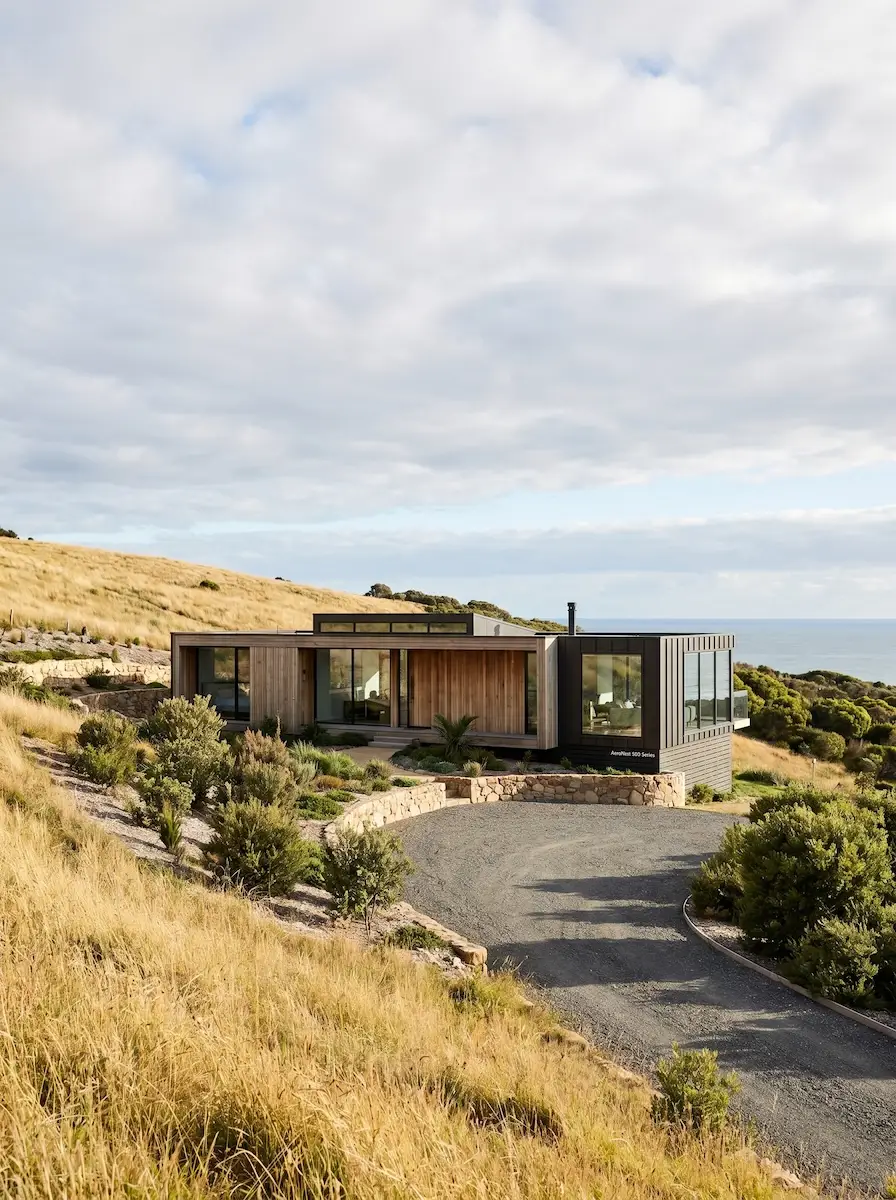
Start with the land, then the model
It is tempting to choose a home the way you choose most things with a picture: by deciding which one you like. With a modular home that order is usually backwards. The land decides more than the catalogue does.
A model that looks right in isolation can be the wrong answer for a particular plot. A generous house can be difficult to deliver down a narrow boreen. A glazed, view-led design can be uncomfortable on an exposed ridge. A compact studio can be too small for the life a family is actually planning. Choosing well between the Studio Nest, the Meadow, the Coast, and the Courtyard begins with the site — its access, its exposure, its services, its planning context — and only then turns to the model.
Define the use before choosing the size
Before size, settle the use. A home that will be lived in full-time is a different proposition from a guest space, a garden studio, a remote work room, a holiday retreat, a downsizing move, or a long-term family base. These are not just labels; they change the project.
Intended use affects the planning context, the services a site needs, the layout, the specification level, the amount of storage, and the realistic budget. A building used occasionally and a building lived in every day of an Irish winter are held to different standards of comfort and durability. Deciding the use first makes the rest of the conversation — including which series fits — far simpler and far more honest.
The Studio Nest: when a small footprint is enough
The Studio Nest is the smallest model in the range, and for the right brief that is its strength. It suits a garden studio, a guest suite, a creative or work space, a wellness or therapy room, a compact retreat, or a small plot where a larger building would crowd the ground. It is also the lower entry point into the range.
From €89,000, at 28–42 m², as a studio or one-bedroom layout, it is deliberately compact. It is not the right answer for a full family home, for households that need significant storage, or for full-time long-term living — those uses can only be approached with careful planning and a proper services review, and usually point toward a larger model.
The Meadow: quiet rural living with restraint
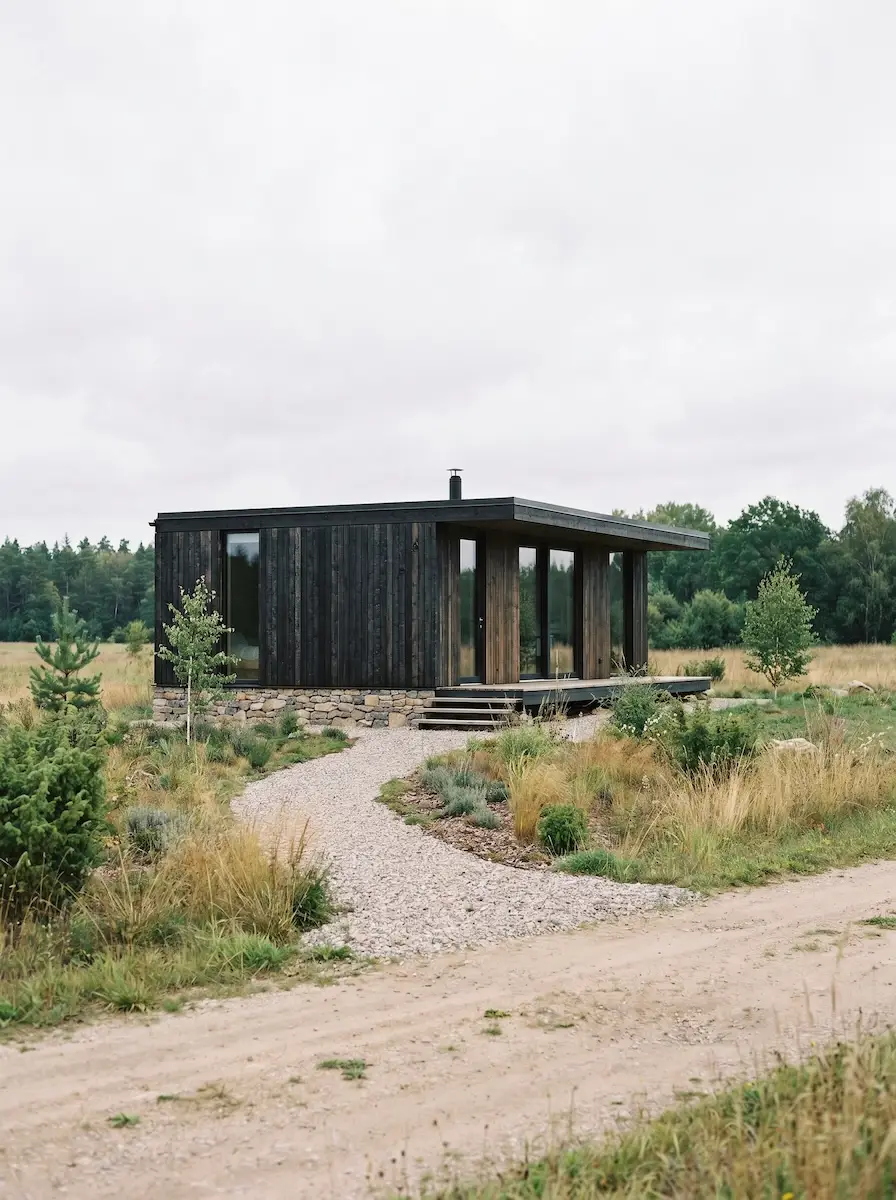
The Meadow is for clients who want a calm rural home without unnecessary volume. It suits rural plots, downsizing, a guest home, one or two-person living, a simple full-time home, or a retreat-style house that is still meant to be lived in properly.
From €149,000, at 52–74 m², with one or two bedrooms, it trades scale for proportion. The Meadow is chosen by people who would rather have warmth, good orientation, and well-judged rooms than extra square metres they will heat and rarely use. On an open rural site it tends to sit quietly, which is usually the point.
The Coast: exposure, views, and shelter
The Coast is built for sites that ask more of a home. It suits coastal plots, lakeside sites, exposed countryside, holiday homes, and view-led locations — places where the envelope, the orientation, the shelter, and the glazing all have to be considered carefully.
From €195,000, at 68–92 m², with one or two bedrooms, it is not simply a model with bigger windows. The Coast is about how a home performs when the weather is doing its worst: rain driven by wind, exposure on more than one side, the need for privacy as well as outlook. Glazing is placed for shelter as much as for the view. On an exposed site, that judgement matters more than the picture.
The Courtyard: privacy, family life, and longer-term living
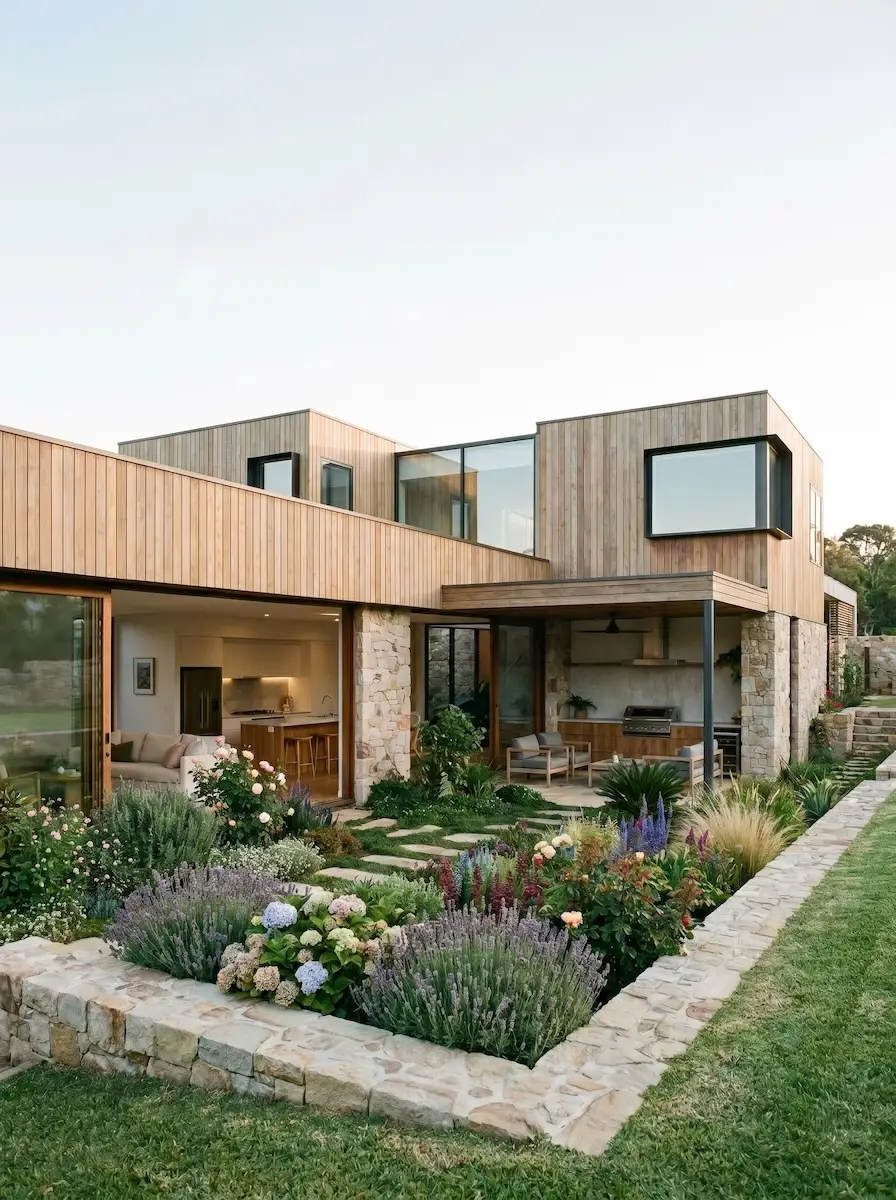
The Courtyard is the largest model, and it is shaped for family-scale living. It suits larger plots, private garden layouts, rural or edge-of-town sites, and households planning a permanent, long-term home with a real connection to sheltered outdoor space.
From €285,000, at 96–132 m², with two or three bedrooms, it gives daily life more structure: storage, separation between rooms, privacy, and an arrangement that supports family routines. It is the right answer when a home needs to absorb years of ordinary life rather than a season or two — and when the site is generous enough to let it sit well.
A simple way to compare the series
“The right modular home is not the largest model you can place on a site. It is the one that makes the site, the budget, and the daily life feel resolved.”
Site access can change the answer
Access can quietly overrule a preference. The route to the site — the public road, the gateway width, the turning space, slopes, mature trees, overhead lines, and the room to stage a delivery or position a crane — all influence which models are realistic.
A site that is a pleasure to live on is not always easy to deliver to. Where access is tight, a smaller or more carefully sized model may be the sensible direction, regardless of which design was first on the list. This is why access is reviewed early. It is far better to know a constraint before a model is chosen than to discover it afterwards.
Planning context should be understood early
It is worth repeating plainly: a modular home is a construction method, not a planning exemption. Whether permission is required depends on the intended use, the location, the scale of the building, the local authority’s context, and the documentation involved.
This is not a reason for anxiety, but it is a reason to start the planning conversation early. A guest space, a studio, and a permanent dwelling are not treated the same way, and clarity at the beginning lets the right professionals be involved before design decisions are fixed. Choosing a series is easier once the planning context is understood, because some answers depend on it.
Services and groundworks shape the real budget
A ‘from’ price is a starting point, not a quotation. The real budget takes shape once services and groundworks are understood: electricity, water, broadband, and — on sites without mains drainage — wastewater, which calls for site suitability and professional assessment. Add the ground itself: levels, the foundation approach, drainage, and the delivery route.
None of this is unusual, and none of it should be discouraging. It simply means a model price becomes genuinely useful only after the site has been reviewed. A series chosen with the services and groundworks already in view is a series chosen with open eyes.
How to use the AeroNest series as a decision tool
Once the site is understood, the range works well as a simple decision tool. If you need a compact garden or guest space, the Studio Nest is usually the honest answer. If you want small-scale rural living with restraint, the Meadow fits. If the site is exposed or strongly view-led, the Coast is built for it. If you need a family-scale home with privacy and outdoor connection, the Courtyard is the model with room for that life.
These are starting points rather than rules. A site can pull the decision in a particular direction, and the brief can refine it. But used this way — site first, use second, model third — the choice tends to become clear rather than agonising.
Before choosing a series, ask
- What will the home be used for most of the year?
- Is this a permanent home, guest space, studio, retreat, or family base?
- How exposed is the site to wind, rain, and open views?
- What access route does delivery need to follow?
- Are water, electricity, broadband, and wastewater routes clear?
- What level of storage and privacy will daily life require?
- Is the budget range aligned with the intended specification?
- Which model feels right after the site constraints are understood?
The right model should feel inevitable
When the work is done in the right order, the choice of series rarely feels like a gamble. The right model tends to feel almost inevitable: it belongs to the land it will sit on, to the budget that is actually available, to the access the site allows, and to the life that is planned inside it.
That is the aim of a first conversation with AeroNest — not to suggest the largest model that will fit, but to help a client arrive at the one that makes the site, the budget, and the daily life feel resolved. If you are weighing a particular plot, a private brief is the place to start.
This article is general guidance only. Planning, services, wastewater, delivery, installation, energy performance, grants, and final pricing depend on the site and should be confirmed with the relevant professionals.